Heatbit
5 days agoNews Editor

Heatbit launches Bitwater, a Bitcoin-mining water heater element priced at $899

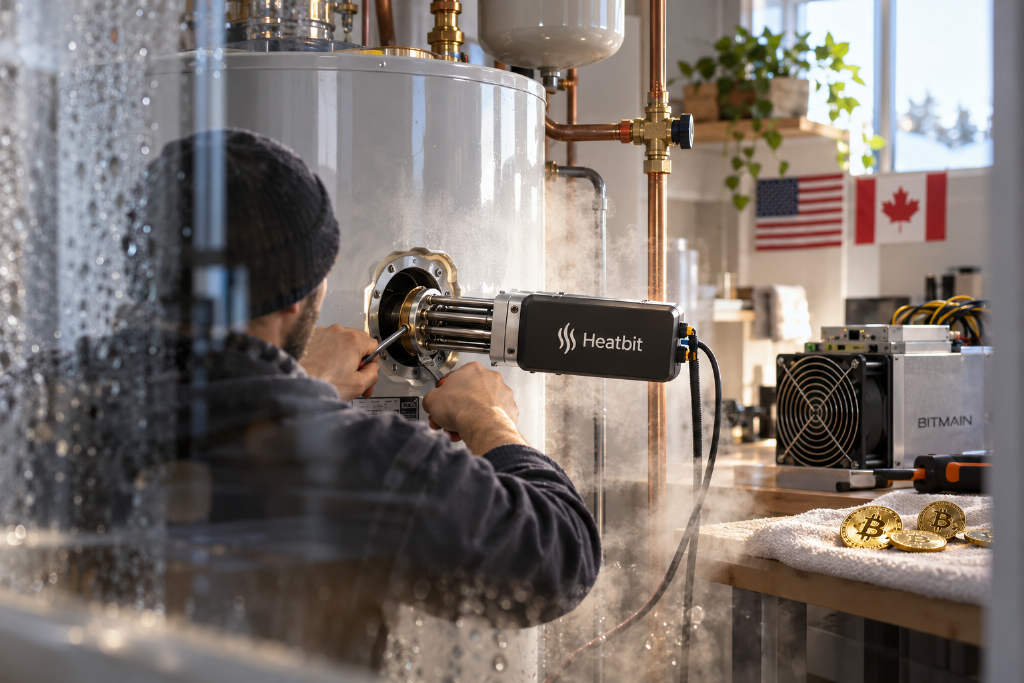
Heatbit has introduced Bitwater, a Bitcoin-mining heating element designed to fit into existing electric water heaters in the U.S. and Canada. The first preorder batch is priced at $899, with shipments scheduled for the first quarter of 2027. The company says the unit can deliver up to 34 TH/s at 600 watts and pitches it with a simple line: the same heat, the same electricity, plus Bitcoin. The product replaces the lower heating element in a standard electric tank and uses 20 Bitmain BM1370 chips to transfer mining heat directly into the water. Heatbit says the upper element and thermostat remain in place as backup, and installation should take 30 to 45 minutes without plumbing changes or a new circuit. A $99 live video installation guide will also be offered after shipping. The economics are less straightforward. Based on the figures cited in the source article, Bitwater could generate about $1.25 per day at full speed, or roughly $365 per year at an 80% runtime. That implies a payback period of about two to 3.6 years depending on pricing and usage, while the warranty lasts only one year. The article also notes that if the device is treated purely as a miner, daily electricity costs would exceed mining revenue, making the value proposition heavily dependent on the assumption that the power would have been used for water heating anyway.

400
Heatbit launches Bitwater, a Bitcoin-mining water heater element priced at $899
Bitcoin
3 months agoNews Editor

Solo home miner finds Bitcoin block with Bitaxe device, earns about $200,000

A solo home miner found Bitcoin block 957382 at around 03:30 on July 9 using a handheld Bitaxe device through Public Pool, according to Odaily, citing Bitcoin.com News. The miner received the full 3.1382 BTC block reward, worth about $200,000 at the time. The payout included the standard 3.125 BTC block subsidy and roughly 0.0132 BTC in transaction fees. The device averaged 995.2 GH/s and submitted the winning share after running for about eight hours. Bitaxe is an open-source, single-chip Bitcoin miner built on Bitmain's BM1370 chip. Its Gamma series typically delivers about 1.0 to 1.3 TH/s, uses 15 to 21 watts of power, and usually sells for $60 to $150. The case highlights a rare block win by a low-cost, low-power setup connected to a public mining pool.

1740
Solo home miner finds Bitcoin block with Bitaxe device, earns about $200,000
Bitcoin mining
3 months agoNews Editor 01

FutureBit Apollo III Brings Home Bitcoin Mining and Full Node Operation to the Desktop

FutureBit has introduced Apollo III, a home Bitcoin mining system that combines a high-performance miner and a full Bitcoin node in a single desktop device. The product is built around next-generation 3nm American-designed ASICs and an in-house controller, which the company describes as the first U.S.-engineered Bitcoin ASIC paired with a domestically built hardware platform in a consumer desktop form factor. Apollo III is designed to extend FutureBit’s long-running effort to decentralize hash power by giving individuals access to low-power, home-friendly mining hardware. According to the announced specifications, Apollo III delivers up to 18 TH/s in Turbo Mode and up to 15 J/TH efficiency in Eco Mode. It also includes an integrated full Bitcoin node with solo mining capability, plus a desktop-class controller featuring 8 ARM cores, 8 GB of RAM, and a 2 TB SSD. The company says the device can provide more than 10 TH/s while consuming power comparable to standard household electronics, making it suitable for continuous use in a home or office. FutureBit argues that home mining is no longer primarily about competing with industrial miners on profitability. Instead, its value lies in privacy, education, self-verification, and greater decentralization. By allowing users to mine and run their own nodes, the Apollo line aims to restore what the company calls “full Bitcoin citizenship,” echoing Satoshi’s original vision of a network with broad individual participation. The article also highlights how home miners can strengthen Bitcoin through geographic distribution, block template diversity, and reduced dependence on large industrial pools that may be vulnerable to regulatory capture.

750
FutureBit Apollo III Brings Home Bitcoin Mining and Full Node Operation to the Desktop